

Key Takeaways
- Krem Chympe is India's 5th-longest cave, a limestone river cave in the East Jaintia Hills near Bishnong village, roughly 125-130 km from Shillong.
- The visit combines a jungle trek, a waterfall stop, and bamboo rafting into the cave mouth itself, guided access only.
- Best time to visit is October to April, when the river runs clear; the cave closes in monsoon (June-September) due to flash flood risk.
- Ready to actually go? Our Meghalaya Offbeat Experience, 7 Days includes Krem Chympe alongside Mawlyngbna and Wari Chora.
Most people who've heard of Meghalaya's caves know Mawsmai or Siju. Krem Chympe is different, it's deep in the East Jaintia Hills, past a stretch of cement factories most tourists never drive through, and it only started seeing visitors in the last few years. Locals in the area have known the river and its cave for generations through fishing trips, but it's still genuinely offbeat: low visitor numbers, no paved path, and an experience that changes depending on how much it rained the night before.
The moment you first see it is what makes the effort worth it. You come down a rock slope, the jungle opens up, and there's this dark mouth in the limestone with a river running out of it, still and green. Nothing about the walk in prepares you for it. People who've made the trip describe the same thing: a kind of disbelief that a place like this is real, let alone in India, let alone reachable by a bumpy pickup ride and an hour on foot.
Where Is Krem Chympe?
Krem Chympe sits in the East Jaintia Hills, near Bishnong village, close to Khaddum, roughly 125-130 km (4-5 hours) from Shillong and about 55-65 km from Jowai. "Krem" means cave in the local language, and "Chympe" is the name of the river that carved it. The cave is officially India's 5th-longest, stretching past 10.5 km, though visitors only explore a portion of it on a guided trip.
The waterfall at the cave's mouth is also known locally as Khaddum Falls, and some visitor accounts use "Khaddum" and "Krem Chympe" interchangeably for the same site.
How to Reach Krem Chympe
From Jowai, the drive to Bishnong takes roughly 2 hours by road. The route runs past several cement factories, including Dalmia Cement and Star Cement, the last major landmark before a left turn onto a rougher stretch of road leading into Bishnong.
Personal vehicles and bikes park at Bishnong village. From there, the rest of the journey depends entirely on the weather:
- If the road is dry, a local pickup truck or 4x4 covers the off-road stretch, and the walk from wherever it drops you to the cave takes anywhere from 20 minutes to about 1.5 hours.
- If it's rained recently, the road can become impassable for vehicles, and the trip becomes a full trek of roughly 7-8 km, taking 2.5 to 3 hours one way.
Either way, you'll need a local guide, both to find the way (there are no signboards) and because the guides are the ones who actually run the bamboo rafting inside the cave. Homestays in the area aren't listed online; you book them through the guide you arrange your trip with.
What the Trail Looks Like
Around 10-15 minutes into the walk, the trail crosses a hanging suspension bridge. Below it, two rivers meet: one runs clear blue even in the dry season, the other stays a muddier color year-round. Vehicles bypass this bridge on a lower route, so it's a view only walkers get. Partway along, there's a second checkpoint with an entry counter, where bananas are sometimes offered free and where, somewhat surprisingly this deep into the hills, mobile network holds up well enough for UPI payments.
The Cave and Bamboo Rafting
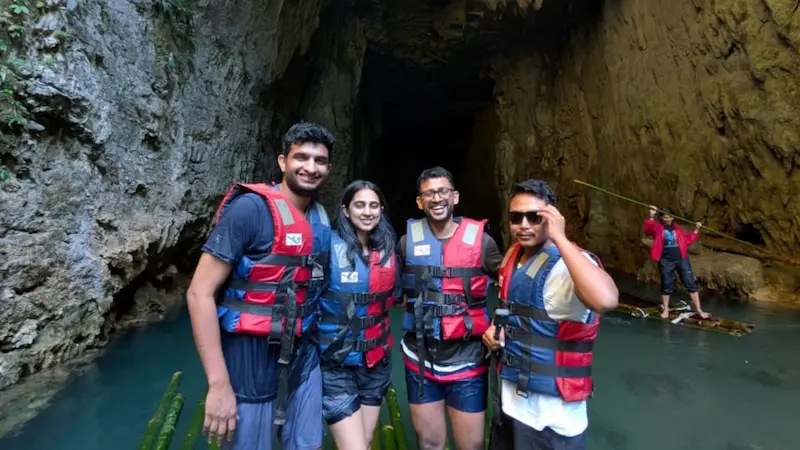
At the cave mouth, you'll need to change into clothes you don't mind getting wet. Guides provide life jackets, worth wearing even if you're a confident swimmer, at least for the first stretch. From there, the entry point is a careful climb down a rock slope to the water's edge.
The raft ride in is where it stops feeling like a hike and starts feeling like something else. A guide poles you across a few hundred meters of calm water, and the raft sits just low enough that the water comes up around you, so it feels less like sitting on top of the river and more like floating inside it. The cave swallows the daylight fast. Within a few dozen meters you're in near-total darkness, just headlamps, the drip of water off the ceiling, and a limestone chamber opening up around you like the inside of a cathedral.
About 200 meters in, most trips have you get off the raft and continue on foot or by crawling through narrower sections, with water 50-60 feet deep on either side in places. The passage includes roughly 50 natural rock dams, some as tall as 12 meters, and deeper in, you can hear a waterfall somewhere inside the cave before you ever see it, just the sound of it echoing off the rock. A full cave tour typically runs 2 to 2.5 hours, and most people go quiet for long stretches of it, there isn't much to say once you're actually inside.
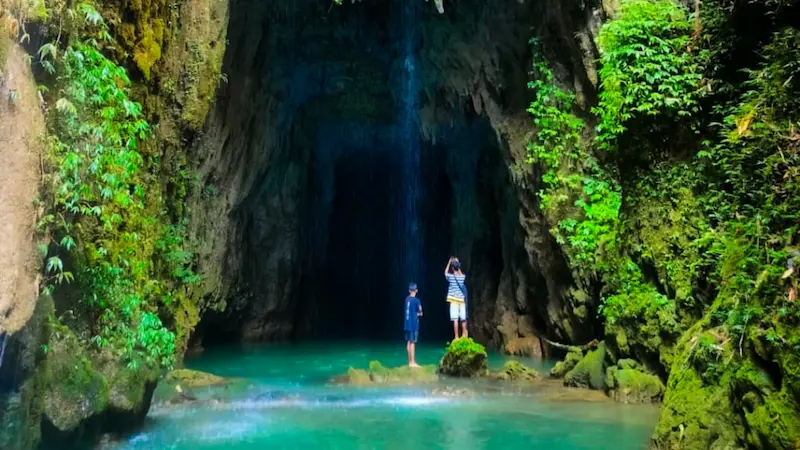
A separate waterfall sits just a few minutes past the cave on foot, and by most visitor accounts, it's one of the more striking falls in the state, wide and fan-shaped where it spreads across the rock face before narrowing into a single drop.
Best Time to Visit
October to April is the reliable window, when the river runs a stable, clear turquoise and conditions are safe for both the trek and the rafting. Visiting early in the day also means avoiding the crowds that tend to build up by afternoon.
The cave closes entirely during monsoon season (June to September), when the river can flash flood and entry becomes genuinely dangerous.
Know Before You Go
- A local guide is mandatory, no exceptions, even if you're self-driven and experienced.
- There's a small entry/permit fee (around ₹50 per person in most accounts), collected at a registration point along the way.
- Bring shoes with real grip. The trail includes some rock scrambling, not technical climbing, but not a flat walk either.
- Expect to get wet. Between the trek, the rafting, and the cave itself, this isn't a trip for anyone unwilling to get in the water.
- Vehicle access varies day to day. Don't plan a tight schedule around this trip, if it's rained recently, you may be trekking both ways instead of riding partway.
Frequently Asked Questions
How far is Krem Chympe from Shillong?
Roughly 125-130 km, about a 4-5 hour drive to Bishnong village, followed by the trek and rafting portion of the trip.
Do I need a permit to visit Krem Chympe?
Meghalaya doesn't require an Inner Line Permit for Indian citizens. There is a small local entry fee, collected at a registration point on the way to the cave.
Is Krem Chympe safe for beginners?
With a local guide, life jacket, and reasonable fitness, yes. It's not technical, but it does involve trekking on uneven terrain, wading through deep water, and time inside a dark cave, so it suits travelers comfortable with real physical activity rather than a casual sightseeing stop.
Can I visit Krem Chympe without a guide?
No. Guides are required both to navigate the unmarked trail and to operate the bamboo rafts, there's no legitimate way to do the cave portion without one.
What should I bring?
Clothes and shoes you don't mind getting soaked, a change of dry clothes for after, and a headlamp or torch if you have one, though guides typically carry these.
Ready to Visit?
Krem Chympe is one of the stops on our Meghalaya Offbeat Experience, 7 Days, alongside Mawlyngbna and Wari Chora, all genuinely off the standard Meghalaya circuit. Message us on WhatsApp to start planning.

About the Author
Saurav
Loves being the one out front on a trail, camera in one hand, route notes in the other. Saurav leads treks and adventure routes across Northeast India and shoots most of TOB's on-ground photography along the way, so what he writes tends to come from having actually walked the path, not just planned it.
Inspired to Travel?
Let Us Plan Your Trip to Northeast India
Every place you just read about, we can take you there. Private, customised, unforgettable.


